Grid-Tie Solar Systems in Hyderabad — Earn TSSPDCL Net Metering Credits
Grid-Tie Solar System
A solar system that is tied to the grid is a solar power system that is directly connected to the local electricity grid. It generates electricity from sunlight and delivers that power to your home, business, office, institution or other connected property all while remaining connected to the utility grid.
Unlike an off-grid solar power system, a typical grid-connected solar power system does not need batteries to function normally. The solar energy generated during the day is consumed by the connected electrical loads and the surplus generation may be exported to the electricity grid through an approved metering arrangement, subject to the applicable Telangana regulations and DISCOM requirements.
This makes grid-tie systems one of the most practical ways for homeowners and businesses looking for on-grid solar in Hyderabad to reduce dependence on conventional grid electricity without the additional cost and maintenance requirements of a large battery bank.
Samraj Solar is one of the leading suppliers of grid tie solar systems in Hyderabad and we are committed to providing our clients with the best solar systems based on their electricity consumption, available rooftop space, electrical load, site conditions and applicable metering requirements. The system is intended to make the best practical use of solar generation that is available and keep the property connected to the utility grid.
A simple way to understand a grid-tie system is:
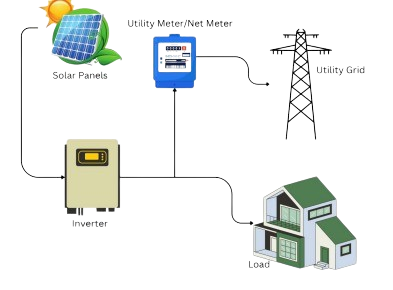
Solar panels generate electricity → inverter converts it into usable AC power → building uses the solar power → surplus can be exported to the grid → grid supplies electricity when solar generation is insufficient.
This makes the system particularly suitable for properties that already have a reliable electricity connection and consume a significant amount of electricity during daylight hours.
How net metering works: Net metering is a billing mechanism that enables eligible rooftop solar customers to measure the electricity they import from and export to the grid under the applicable regulatory and metering structure. In practice, the property uses first the electricity produced by the solar system. Where a property has a solar generation that exceeds the immediate need, the surplus may be sent to the grid via the approved meter arrangement. If the property needs more electricity than the solar is producing, the system pulls electricity from the grid.
The process generally comprises five steps. The initial step involves the analysis of the electricity bills, sanctioned load and consumption pattern of the property to determine a suitable solar capacity. Second, the usable area, structural suitability, shading, orientation and placing of equipment of the rooftop and electrical infrastructure are assessed. 3. Application and documentation as applicable is submitted through the Telangana DISCOM process. 4. Installation, testing and synchronisation to the grid of the approved solar system. Finally, the necessary metering arrangement is put in place and the system is activated under the relevant settlement mechanism.
The rooftop solar framework of Telangana is governed by the applicable regulations and proceedings issued by Telangana Electricity Regulatory Commission and concerned distribution utility. Eligibility, capacity, metering arrangement and settlement mechanism may vary as per consumer category and applicable regulations at the time of application. This is why solar net metering in Hyderabad should be planned as part of the system design rather than treated as an installation step after the panels have already been purchased.
Grid-tie, off-grid and hybrid systems: A grid tie system is primarily designed to reduce consumption of grid electricity while still being connected to the utility network. An off-grid system is designed to work without the electricity grid and therefore generally requires battery storage to provide electricity when solar generation is unavailable. A hybrid solar system is a combination of solar generation, grid electricity and battery storage, more suited to properties wanting to cut down electricity bills and have backup power during grid interruptions.
If the property is connected to the grid and the primary objective is to reduce electricity bills, a grid-tie solar system is often the easiest setup. If uninterrupted power is important, the hybrid system may be more suitable. The right choice depends on property’s load profile, backup requirements, grid reliability & budget.
A typical grid-tie solar installation includes solar PV modules, a grid-connected inverter, mounting structures, DC and AC cables, protection equipment, earthing and safety components, monitoring equipment and the required metering arrangement.
The selection of equipment is important as a rooftop solar plant is a long term energy asset. The module brands that can be considered include Tata Power Solar, Waaree Energies, Vikram Solar and Adani Solar depending on the project requirements. Inverter options could be from well known manufacturers like Sungrow, Solis, GoodWe and Growatt. The final choice of equipment should be based on technical specifications, current compliance requirements, warranty, system design, availability and project economics and not on brand name alone.
For commercial and industrial projects, the applicable ALMM requirements and regulatory conditions relevant to the project should also be considered when procuring equipment.
Benefits
- The system can reduce electricity purchases from the grid by generating power onsite.
- It typically operates without the need for a large battery bank, reducing upfront costs and eliminating the need for frequent battery replacements that are common in traditional storage systems.
- It uses empty rooftop areas to create a productive asset for generating energy. Today’s grid-tied inverters include monitoring capabilities so users can monitor solar generation and system performance.
- It can be sized to match the electricity demand of the premises and the available roof space, subject to technical and regulatory constraints.
- It can help companies with high daytime usage better manage energy spend over the long term.
- The system could be combined with PM Surya Ghar rooftop solar subsidy for eligible residential consumers.
- Samraj provides a reverse feeding controller that protects diesel generators by preventing reverse power flow.
- Rooftop solar should be designed to provide roof shading to help reduce direct solar heat entering the building.
A grid-tie solar system is not just simply a collection of solar panels. The system must be sized, electrically integrated, protected, monitored and commissioned to the needs of the property.
For a grid-connected solar system in Telangana, the right place to start is the electricity bill and the actual conditions at the site. The final system capacity should be decided keeping in mind the electricity consumption, day time load, sanctioned load, rooftop area, shading, electrical infrastructure and the metering requirements as per the applicable.
Samraj Solar offers complete solar EPC support from site assessment, system design, equipment procurement, installation, electrical integration, testing, commissioning and applicable regulatory support. In the case of on-grid solar, our goal is to design the system based on the real energy needs of the property if a customer in Hyderabad is looking for solar, and not just push a generic solar product.